
The Connection Between Clutter and Stress

Clutter is more than visual, it’s psychological.
When your brain sees unfinished tasks, piles of paper, or scattered belongings, it registers them as reminders. Even if you’re not actively thinking about the mess, your mind is processing it.
Clutter can contribute to:
Increased stress levels
Decision fatigue
Difficulty concentrating
Feelings of overwhelm
Trouble relaxing at home
An organized space reduces background noise in your mind. When everything has a place, your brain can rest.
Visual Calm vs. Visual Noise
Imagine walking into two rooms.
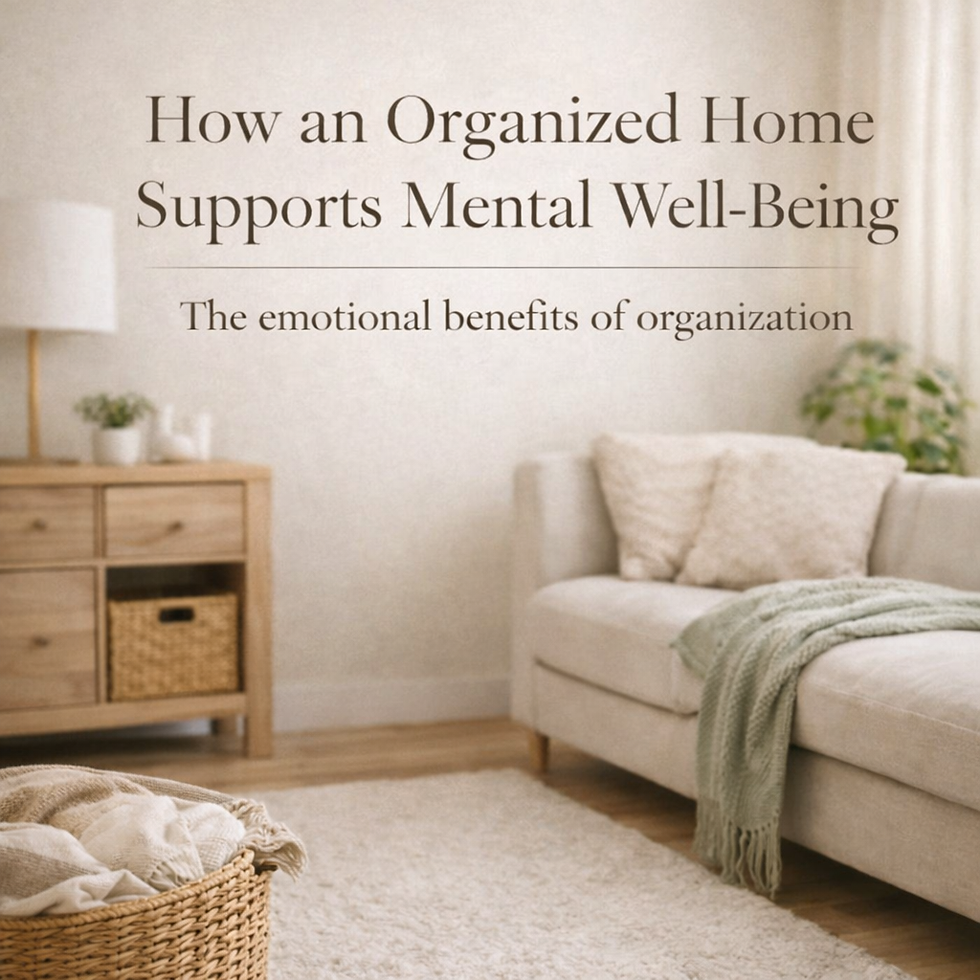
One has clear surfaces, soft tones, and open space.The other has stacked mail, crowded counters, and items without a home.
Even without touching anything, you feel the difference.
Visual calm allows your eyes, and your nervous system to settle. Visual noise keeps your brain scanning and processing.
Creating visual calm doesn’t require minimalism or getting rid of everything you own. It simply means reducing excess and creating breathing room.
Clear counters. Defined storage. Fewer distractions.
Small shifts create powerful emotional change.
How Routines Feel Easier in Organized Spaces
When your home is organized, everyday routines flow more smoothly.
Mornings feel less rushed when you know where everything is.
Cooking feels easier when your kitchen is streamlined.
Bedtime feels calmer when surfaces aren’t cluttered.
Organization reduces friction.
Instead of searching, rearranging, or navigating around clutter, you move through your space with clarity. That clarity lowers stress and increases confidence.
You don’t have to think about where things are, you just live.
Small Changes That Make a Big Emotional Difference
You don’t need a full-home overhaul to feel better.
Try starting with:
Clearing one countertop
Organizing one drawer
Creating a simple drop zone for keys and mail
Resetting one high-traffic area
Small wins build momentum. And each small change sends a message to your brain: this space is manageable.
Progress creates peace.
Creating a Home That Feels Supportive, Not Perfect
Perfection is exhausting. Support is sustainable.
A supportive home:
Makes daily tasks easier
Feels calm, not rigid
Allows for real life
Is easy to reset
An organized home isn’t one that never gets messy. It’s one that can recover quickly.
Your space should support your mental well-being, not add pressure to perform or maintain unrealistic standards.
Final Thoughts
Organization isn’t about matching containers or Pinterest-perfect shelves.
It’s about creating an environment that allows you to think clearly, move easily, and relax fully.
When your home feels calm, your mind follows.
If your space feels overwhelming and you’re not sure where to begin, we’re here to help you create systems that feel supportive and sustainable.
Organization isn’t about perfection, it’s about peace.


Comments